Table of Contents
Key Takeaways
- Do not confront the people you suspect or alert coworkers before considering the consequences.
- Keep clear notes about what you personally observed, reviewed, heard, or handled.
- Preserve records only when you are lawfully permitted to access and retain them.
- Choose a reporting path that fits the suspected conduct and government program involved.
- Do not assume confidentiality, anonymity, anti-retaliation protection, or a financial award is automatic.
- Document workplace changes after reporting, especially if they appear connected to your disclosure.
Reporting suspected government fraud can be a serious and stressful decision, particularly when public funds, healthcare billing, government contracts, grants, taxes, or regulated markets may be involved. Before acting, take time to organize what you know, protect yourself from avoidable mistakes, and consider whether speaking with whistleblower lawyers for False Claims Act cases may help you understand the available options. You do not need to solve the entire case before raising a concern. Investigators may have authority to obtain records, interview witnesses, and analyze transactions that are not available to an individual reporter. However, a factual, well-organized report can make it easier for the appropriate agency to evaluate the information.
Why Preparation Matters Before a Report
A rushed allegation can be difficult to verify, particularly if it blends firsthand knowledge with assumptions, office rumors, or conclusions about someone’s motives. Preparation helps separate what you know directly from what you believe may have happened. It also reduces the chance that important dates, names, records, or communications will be forgotten. Suspected fraud is not the same as an ordinary workplace disagreement or a minor policy violation. The central question is usually whether someone knowingly made false statements, submitted false claims, concealed material information, misused public funds, or engaged in another unlawful scheme involving a government program or regulated activity.
Step 1: Identify the Conduct Clearly
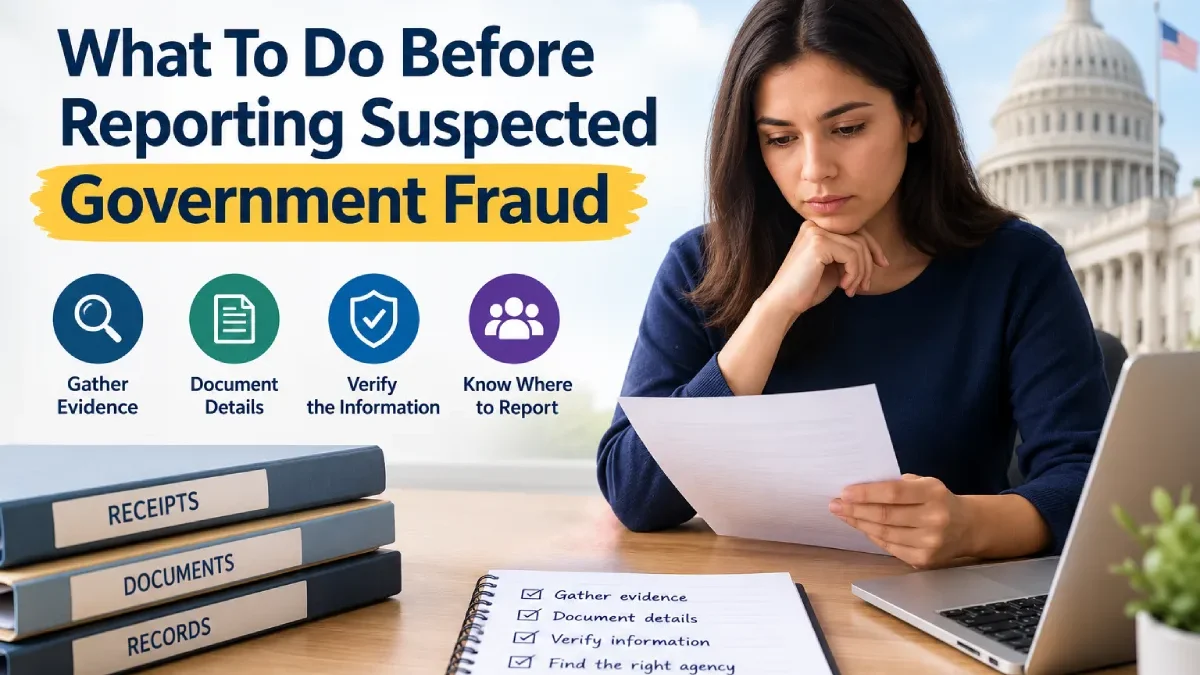
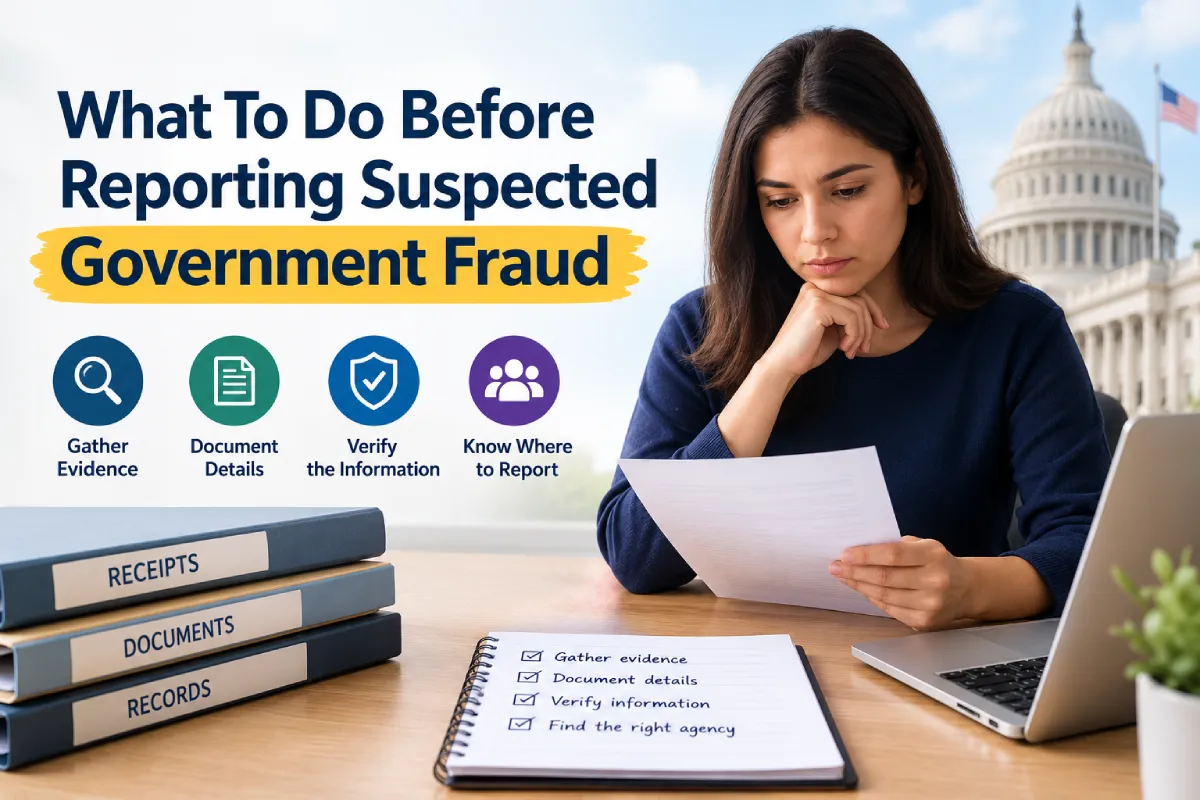
Start with a plain-language description of the concern. State what happened, who may have been involved, when and where it occurred, and which agency, program, contract, payment system, or public funding source may be affected. Examples may include false billing to a healthcare program, kickbacks, billing for goods or services not provided, defective products supplied under a government contract, false certifications, misuse of grants, tax violations, securities misconduct, or disaster-relief fraud. Avoid applying legal labels unless you can explain the supporting facts.
Step 2: Build a Fact-Based Timeline
A timeline often gives investigators the clearest starting point. Write down the earliest relevant event you personally observed, then add later events in order. Use dates when known, or identify the approximate month or period when an exact date is unavailable.
- Record the date, location, department, project, or business unit involved.
- Identify the people involved by name, role, or job title.
- State how the information came to your attention.
- Distinguish firsthand observations from information another person shared.
- List the records, messages, invoices, reports, or system entries that may support each event.
- Mark questions that remain unresolved rather than filling gaps with guesses.
Step 3: Preserve Evidence Lawfully
Useful evidence should be preserved carefully, but only through lawful means. Keep copies of records you are authorized to possess, and make neutral notes identifying where each item came from and when you accessed it. Do not alter original files, change file names to make them misleading, bypass passwords, or enter systems you are not authorized to use. Be especially cautious with patient information, customer data, personnel records, attorney communications, trade secrets, and other restricted material. Sending sensitive files to a personal email account or cloud storage service can create separate legal, privacy, or employment problems. If the evidence includes confidential material, seek advice before copying or transferring it.
Step 4: Avoid Actions That Could Weaken the Report
A calm and factual approach is generally safer than a public accusation. Do not confront the person you suspect, conduct your own workplace interrogation, threaten to expose the issue, or post allegations on social media. Those actions can alert potential wrongdoers, create confusion about what happened, and expose you to unnecessary risk. Also avoid exaggerating a financial loss, speculating about intent, or claiming you have proof when you only have a concern. If records are incomplete, say so. A credible report explains the limits of the available information instead of overstating the case.
Step 5: Choose the Correct Reporting Channel
The right reporting path depends on the suspected conduct. Healthcare payment issues and government-contract concerns may warrant review by an agency inspector general or another federal enforcement channel. Securities, commodities, tax, procurement, and state-level matters may have separate reporting systems and requirements. For certain federal fraud matters, the Department of Justice explains that eligibility for a potential reward can depend on information being voluntary, original, specific, truthful, complete, and timely. Reviewing the federal fraud tip criteria before submitting a report can help a potential whistleblower understand why details and timing matter.
Concerns involving commodities or derivatives should be directed through the appropriate specialized process. The CFTC’s whistleblower program provides information on submitting tips, confidentiality, anti-retaliation protections, and award procedures for possible violations of the Commodity Exchange Act.
Step 6: Understand Confidentiality and Retaliation Limits
Confidential reporting, anonymous reporting, and legally protected reporting are different concepts. An agency may try to protect a reporter’s identity, but investigators may need follow-up information, and disclosure can sometimes be required during a judicial or administrative proceeding. Ask who will receive the report, whether your identity may be shared, and how future communications will occur. Retaliation can take many forms beyond termination. It may include reduced hours, demotion, negative performance reviews, exclusion from normal duties, threats, harassment, or pressure to resign. Protections vary based on the law, employer, type of disclosure, and reporting method. Preserve relevant emails, messages, performance records, schedules, and notes about any sudden workplace changes.
Consider Speaking With a Lawyer Before Filing
Legal advice is not required for every report. Still, it can be useful when facts are complex, confidential records are involved, retaliation is a concern, or multiple reporting programs may apply. A lawyer may help organize the evidence, identify deadlines, explain the difference between an internal complaint and a formal government submission, and reduce the risk of improperly disclosing protected information.
What Makes a Report More Useful?
- A summary of the suspected misconduct.
- Names, roles, and entities connected to the events.
- Dates and locations of key events.
- The government funds, programs, contracts, or markets involved.
- A reasonable estimate of the impact, if known.
- A list of supporting records and where to find them.
- An explanation of your personal connection to the information.
- Any immediate risk that evidence may be lost or harm may continue.
After You Report
Keep confirmation numbers, submission receipts, and a dated record of follow-up contacts. Continue documenting relevant workplace events in neutral language, and submit genuinely new information through the proper channel rather than repeatedly resending the same allegation. Investigations can take time, and limited communication from an agency does not necessarily mean the report was ignored.
Conclusion
Careful preparation can make a suspected government fraud report clearer, more responsible, and more useful to the agency or authority reviewing the information. Begin by identifying the specific conduct that raised concern and separating firsthand observations from assumptions, secondhand accounts, or personal opinions. Record relevant dates, locations, individuals involved, transactions, and other details while they are still fresh. Preserve supporting documents, emails, messages, photographs, payment records, and other available evidence, but make sure information is obtained and handled lawfully. Avoid altering original files, accessing records without authorization, or sharing sensitive allegations publicly before they have been properly reviewed. It is also important to choose a reporting channel that matches the suspected conduct, since different agencies may handle different types of government misconduct or misuse of public funds. Keep copies of submitted reports and note any reference numbers, follow-up instructions, or applicable deadlines. When confidentiality, possible retaliation, legal obligations, or complex evidence are concerns, seeking qualified legal guidance before taking the next step may help clarify available protections, reporting options, and potential risks.
Also Read: Government may consider levying tds tcs on cryptocurrency trading