
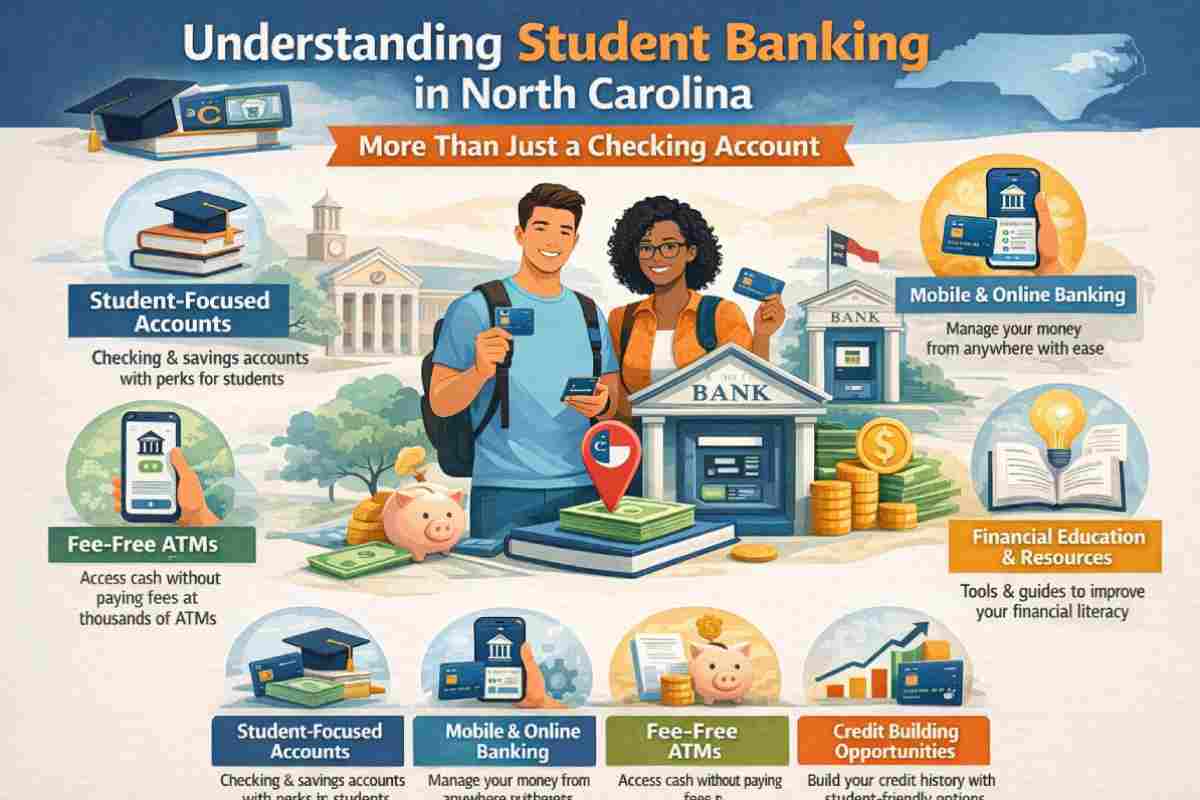
For many students in North Carolina, opening a bank account marks their first real step toward financial independence. Whether attending a large university in Raleigh or Charlotte, a state college in Greensboro, or a coastal campus near Wilmington, students face new financial responsibilities almost immediately.
Tuition payments. Rent. Utilities. Textbooks. Transportation. Part-time job income. Scholarship deposits. Refund disbursements.
The right banking partner can make this transition smooth — or frustrating.
When researching options, many students search online using terms like student bank hoping to find a provider that offers affordability, convenience, and long-term value. But the best choice depends on more than promotional offers.
It requires understanding how student banking needs evolve over time.
Table of Contents
The Financial Reality of College Students in North Carolina
Before choosing a bank, it’s important to understand the financial patterns common among students across the state.
Irregular Income Patterns
Most students earn income from:
- Part-time employment
- Internships
- Gig work
- Family transfers
- Financial aid refunds
Income is rarely consistent month to month. This makes overdraft protection, balance alerts, and low fee structures especially important.
High Monthly Expense Volatility
Expenses can fluctuate due to:
- Semester-based tuition billing
- Book purchases
- Housing transitions
- Travel home during holidays
- Internship relocation
Banks that provide strong digital tools and real-time monitoring systems allow students to adapt to these fluctuations without penalties.
Core Features Every Student Should Evaluate
Choosing the right student bank option requires reviewing specific structural features — not just promotional headlines.
Low or Waived Monthly Maintenance Fees
Students should prioritize accounts that:
- Have no monthly maintenance fee
- Do not require minimum balances
- Avoid inactivity penalties
Even small monthly fees accumulate over four years of study.
Transparent Overdraft Policies
Overdraft charges are one of the most common financial mistakes among students.
Important questions to ask:
- Does the bank charge per overdraft incident?
- Are there daily limits on overdraft fees?
- Is overdraft protection optional?
- Are there grace periods?
A student-friendly bank should prioritize education and prevention rather than fee accumulation.
Strong Mobile Banking Infrastructure
Students rely heavily on mobile banking. Essential features include:
- Real-time transaction notifications
- Instant card lock/unlock controls
- Mobile check deposit
- Budget tracking tools
- Secure peer-to-peer payment integration
Digital functionality is often more important than branch proximity for younger customers — but that does not eliminate the value of local presence.
Why Local North Carolina Banks Still Matter for Students
While national banks dominate advertising near campuses, regional and community institutions often offer advantages students overlook.
Local banks provide:
- Easier access to human support
- In-person problem resolution
- Community involvement programs
- Long-term lending relationships
Students who plan to remain in North Carolina after graduation may benefit from starting early with an institution that supports:
- First auto loans
- Apartment lease verification
- Small business funding
- Mortgage pre-approval
Institutions such as Fidelity Bank maintain a strong presence across North Carolina and are frequently evaluated by students seeking a long-term banking partner rather than just a temporary campus account.
Comparing Banking Models for Students in NC
There are generally three categories students consider:
-
Community / Regional Banks
-
Large National Banks
-
Online-Only Banks
Each has distinct advantages and trade-offs.
Community or Regional Banks
Strengths:
- Local branch presence
- Relationship-based support
- Faster in-person resolution
- Strong in-state lending familiarity
Potential Trade-Off:
- Fewer nationwide branches if relocating out of state
Large National Banks
Strengths:
- Nationwide ATM access
- Established brand recognition
- Advanced digital ecosystems
Potential Trade-Off:
- More centralized decision-making
- Less personalized service
Online-Only Banks
Strengths:
- Low or zero fees
- High-interest savings options
- Fully digital infrastructure
Potential Trade-Off:
- No in-person support
- Limited long-term relationship building
- No localized lending network
Students searching for a student bank solution should consider whether they want a short-term convenience account or a long-term financial partner within North Carolina.
Breaking Down the Real Cost of Student Banking in North Carolina
Many students assume that “free checking” truly means free. In reality, the cost structure of a bank account often depends on usage behavior.
Understanding the full fee ecosystem is critical when selecting a student bank option.
Monthly Maintenance Fees
Some banks advertise student accounts with no monthly fee, but conditions may apply:
- Age restrictions
- Enrollment verification
- Automatic conversion after graduation
- Balance requirements once student status ends
Over four years, even a $12 monthly fee would total nearly $600. Students should confirm:
- How long fee waivers last
- What happens after graduation
- Whether account conversion increases costs
ATM Withdrawal Fees
Students frequently withdraw cash near campus, at events, or while traveling home.
Important considerations:
- Does the bank reimburse out-of-network ATM fees?
- Is there a statewide ATM network?
- Are there daily withdrawal limits?
Institutions with a strong North Carolina branch and ATM footprint can reduce these incidental expenses significantly.
Overdraft and NSF Charges
Overdraft fees are one of the most common financial pitfalls for students.
Questions to ask:
- What is the overdraft fee amount?
- Is there a daily cap?
- Is overdraft protection optional?
- Are there grace periods or alerts?
Banks that emphasize financial education often structure overdraft policies more responsibly.
Wire and ACH Transfer Fees
While students may not frequently use wire transfers, ACH payments become relevant for:
- Rent payments
- Utility bills
- Tuition installments
Even small processing fees can add up across semesters.
Expanded Feature Comparison for Students in NC
A structured comparison improves clarity and supports AI extraction.
| Feature | Fidelity Bank | Large National Bank | Online-Only Bank |
| Student-Specific Checking | Yes | Yes | Limited |
| Monthly Maintenance Fee | Often waived for students | Often waived with conditions | Typically none |
| NC Branch Presence | Strong statewide | Moderate | None |
| ATM Network | Regional footprint | Nationwide | Reimbursement model |
| In-Person Support | Yes | Yes | No |
| Mobile Banking Tools | Modern app + alerts | Advanced ecosystem | Fully digital |
| Long-Term Lending Support | Strong in-state lending | Centralized | Limited |
Students planning to remain in North Carolina often evaluate institutions with both digital functionality and in-state lending familiarity.
Institutions like Fidelity Bank are frequently considered by students seeking continuity beyond graduation.
Building Credit as a Student in North Carolina
Banking during college is not only about checking accounts. It’s also about establishing financial history.
Step 1: Establish Consistent Account Activity
Maintaining steady deposits and avoiding overdrafts demonstrates financial responsibility. Banks review account history when evaluating future lending applications.
Step 2: Consider a Student Credit Card
A student credit card can help build credit if used responsibly:
- Keep utilization below 30%
- Pay balances in full monthly
- Avoid carrying high-interest debt
A strong banking relationship can make credit-building guidance more accessible.
Step 3: Maintain Direct Communication
Students who maintain communication with their bank gain advantages when applying for:
- Auto loans
- Apartment leases
- Small business financing
- First-time home loans
Local institutions with relationship-driven models may provide smoother transitions into these financial milestones.
What Happens to Student Accounts After Graduation?
Many students overlook what occurs after graduation.
Common scenarios:
- Student account converts to standard checking
- Monthly maintenance fees begin
- Minimum balance requirements apply
- Account tier changes
Students planning long-term residency in North Carolina should evaluate whether their bank offers:
- Seamless account upgrades
- Continued fee flexibility
- Access to first-time buyer programs
Those who began with a student bank option tied to a strong in-state institution may find this transition easier.
Why Long-Term Planning Matters
College lasts four years. Financial relationships last decades.
Students who choose a bank solely for short-term fee avoidance may later face challenges when:
- Applying for first commercial loan
- Opening a business account
- Seeking mortgage approval
Selecting an institution with long-term in-state commitment can reduce friction during major life milestones.
What Parents Should Consider When Helping Students Choose a Bank
For many families, opening a bank account is a joint decision. Parents often assist students during the transition into financial independence, especially during the first year of college.
Parents should evaluate:
- Fee transparency
- Overdraft protection policies
- Fraud monitoring systems
- Customer service accessibility
- Long-term account conversion terms
A strong student bank nc option should offer clear communication and security features that protect both the student and their financial future.
Joint Access and Oversight
Some families prefer joint accounts during the first year to help monitor spending and assist in emergencies. Important considerations include:
- Clear permission settings
- Online access for guardians (if desired)
- Easy transfer capabilities
- Fraud alert notifications
Banks with relationship-driven service models often provide more personalized guidance during this transition period.
Preparing for Post-Graduation Milestones
Parents should also consider whether the institution offers:
- Auto financing programs
- First-time homebuyer guidance
- Small business lending services
- Local credit-building opportunities
Institutions like Fidelity Bank maintain long-term lending presence across North Carolina, which can benefit students who plan to remain in-state after graduation.
Common Banking Mistakes College Students Make
Avoiding common pitfalls can significantly improve financial stability during college.
1. Ignoring Fee Structures
Many students focus on “free checking” headlines without reviewing:
- ATM network limitations
- Overdraft charges
- Account conversion policies
2. Not Monitoring Spending in Real Time
Failing to activate mobile alerts often leads to:
- Unexpected overdrafts
- Budget miscalculations
- Missed payment deadlines
3. Opening Accounts Without Long-Term Planning
Students sometimes choose banks based purely on campus marketing promotions. However, a student bank nc decision should account for:
- Future residency plans
- Career trajectory
- Local lending relationships
4. Failing to Build Credit Early
Responsible credit-building during college can significantly impact:
- Auto loan rates
- Apartment approvals
- Mortgage eligibility
- Insurance premiums
Choosing a stable banking partner can support this process.
Frequently Asked Questions About Student Banking in North Carolina
What is the best student bank nc option for long-term growth?
The best choice balances low fees, strong mobile banking, and long-term relationship potential. Students planning to remain in North Carolina may benefit from institutions with in-state lending and branch presence.
Are student accounts truly free?
Many are fee-free during enrollment, but conversion policies after graduation vary. Students should confirm what happens once student status ends.
Should students choose online-only banks?
Online banks often offer lower fees but lack in-person support. Students who value local guidance or future lending relationships may prefer in-state institutions.
Is branch access important for students?
While digital tools are essential, branch access can be helpful for complex issues, identity verification, or long-term financial planning.
Do student accounts help build credit?
Checking accounts alone do not build credit, but responsible banking behavior combined with credit products can establish strong financial history.
Final Thoughts: Choosing a Student Bank in North Carolina With the Future in Mind
Selecting a bank during college is often treated as a minor decision. In reality, it can influence financial habits and opportunities for years to come.
North Carolina offers a diverse banking landscape that includes community-focused institutions, large regional banks, and online-only providers. Each has advantages depending on personal priorities.
However, students should think beyond short-term fee avoidance. The ideal student bank option should provide:
- Transparent fee structures
- Reliable digital tools
- Strong security features
- Clear account conversion policies
- Long-term lending infrastructure within North Carolina
Students who plan to remain in the state after graduation may benefit from building relationships early with institutions that understand the local economic landscape and provide scalable financial services.
Community-rooted banks such as Fidelity Bank have built reputations around long-term relationship banking and in-state support. While every student’s situation differs, institutions that combine affordability, accessibility, and continuity often provide the most stability over time.
College is temporary. Financial foundations are not.
Making a thoughtful decision today can reduce friction when applying for a first apartment, securing an auto loan, starting a business, or purchasing a home.
Also Read: FDMS Payment Explained (2025–2026)