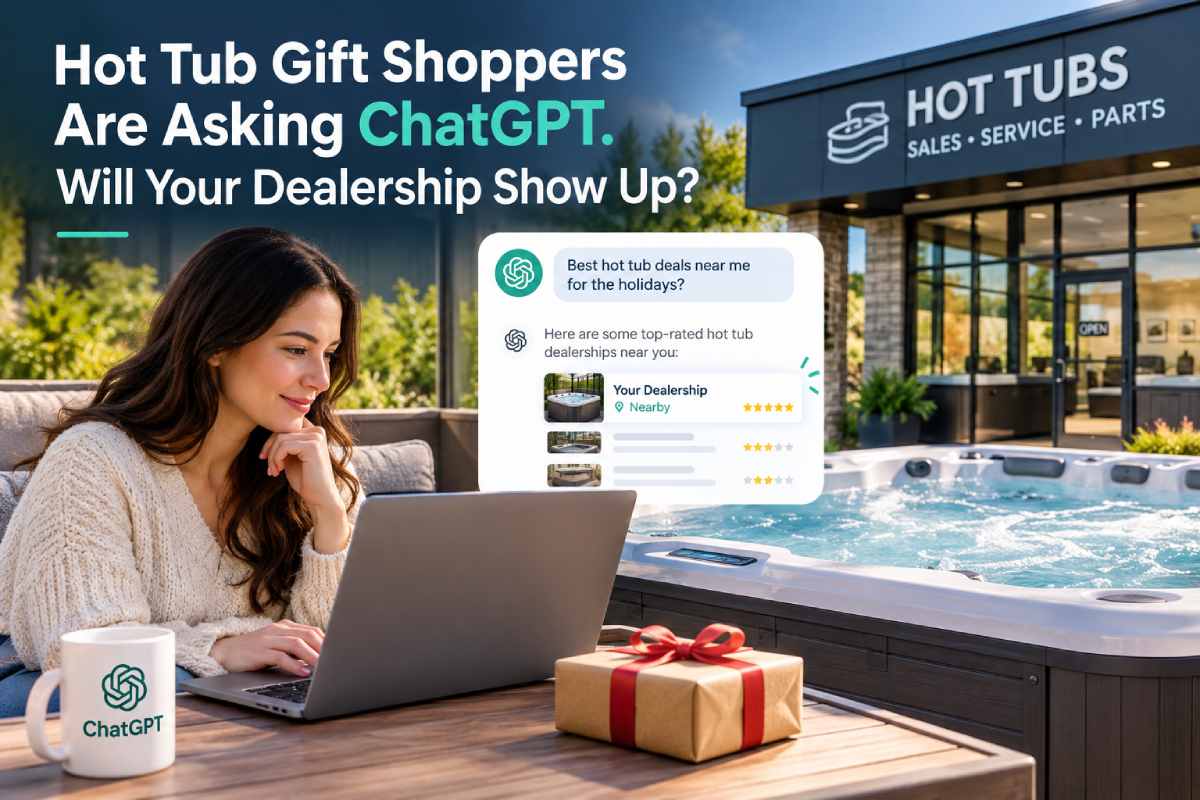
Picture a husband in early November, phone in hand, trying to figure out the biggest Christmas surprise he’s ever pulled off. He doesn’t type “hot tubs near me” into Google and scroll through ads. He opens ChatGPT and asks, “What’s a good hot tub for a family of four under $10,000, and where can I buy one near Sacramento?” In seconds, he gets a short list of models, a few things to watch out for, and maybe two or three local dealers by name. If your showroom isn’t on that list, you never had a chance to make the sale.
That shift is already happening, and the holiday season hurts most. Gift buyers are short on time, unfamiliar with the category, and hungry for someone to just tell them what to do. AI assistants are happy to fill that role. The question for every spa retailer this fall is simple: when the answer gets written, are you in it?
Table of Contents
Why Gift Shoppers Lean on AI More Than Regular Buyers
Someone replacing a 15-year-old spa already knows about jets, seating layouts, and electrical requirements. A gift shopper usually doesn’t. They’re buying for a spouse, a parent, or the whole family, and they’re nervous about getting an expensive purchase wrong.
That uncertainty makes them ask long, conversational questions:
- “Is a hot tub a good Christmas gift for my wife who has back pain?”
- “Can a hot tub be delivered and installed before December 25?”
- “What’s the difference between a plug-and-play spa and a 240V model?”
- “Do hot tub dealers offer gift certificates or holiday financing?”
These are exactly the kinds of prompts ChatGPT, Perplexity, and Google’s AI Overviews are built to answer. And the sources those tools pull from tend to be pages that answer the question directly, clearly, and with specifics.
How AI Assistants Decide Which Dealers to Mention
Large language models don’t rank pages the way a traditional search engine results page does, but they rely on many of the same signals. Perplexity cites live web sources. When browsing, ChatGPT pulls from search results and favors content that’s easy to extract and trust. Across all of them, a few patterns stand out:
Clear, quotable answers. A page that says “Most of our in-stock spas can be delivered within 7–10 days, so orders placed by December 10 typically arrive before Christmas” is far more useful to an AI than a banner reading “Shop Our Holiday Sale!”
Local and entity consistency. Your dealership name, address, brands carried, and service area should match everywhere: your website, Google Business Profile, Yelp, manufacturer dealer locators, and local directories. Mixed signals make it harder for an AI to confidently recommend you.
Third-party validation. Reviews that mention specific details (“they installed our tub two days before Christmas”) give AI systems real evidence. Local news mentions, community sponsorships, and manufacturer award listings help too.
Structured content. FAQ sections, comparison tables, and well-labeled headings make your pages easier for both crawlers and language models to parse.
The Same Problem Online Retailers Are Facing
If you’ve followed the conversation about why your ecommerce brand is not showing up in ChatGPT, the diagnosis for local dealers is nearly identical. Thin product pages, vague marketing copy, missing pricing context, and a lack of genuine customer questions answered on-site all leave AI tools with nothing to cite. The difference is that dealers have an advantage most online-only brands don’t: real local expertise, real installations, and real people who can speak to water care, site prep, and delivery logistics. That knowledge just needs to live on your website in a form machines can read.
A Holiday Content Checklist for Spa Dealers
You don’t need a full site rebuild before the season peaks. Start with a handful of high-impact pages:
- A “Hot Tubs as Gifts” guide. Cover budget ranges, sizes for couples versus families, and what the recipient should know before delivery day.
- A holiday delivery deadline page. State your cutoff dates plainly, explain site prep requirements, and note what happens if the ground isn’t ready.
- An electrical and installation FAQ. Gift buyers often don’t realize a 240V spa needs an electrician. Answering that up front builds trust and earns citations.
- Model comparison pages. Put your top three or four holiday sellers side by side with seating, dimensions, jet counts, and price ranges.
- Gift certificate and financing details. If someone can “wrap” a hot tub with a certificate and schedule delivery in spring, say so clearly.
- Fresh review requests. Ask recent buyers to mention what they bought and how the delivery went.
Frequently Asked Questions
Do AI tools like ChatGPT recommend local businesses?
Yes. When users ask location-specific questions, ChatGPT with browsing and Perplexity frequently name nearby businesses, usually drawing on websites, review platforms, and business listings.
How long does it take for new content to appear in AI answers?
Tools that search the live web, like Perplexity, can surface new pages within days of being indexed. Model training data updates more slowly, which is why consistent, ongoing content matters.
Is traditional SEO still worth it for hot tub dealers?
Absolutely. Strong search rankings feed the sources AI assistants pull from, so classic SEO and AI visibility work together rather than compete.
The busiest gift-shopping weeks arrive fast, and the dealers who get recommended will be the ones who already published clear, helpful answers. Spend October building the pages gift buyers are actually searching for. When that nervous shopper asks an AI where to buy the perfect surprise, your dealership’s name deserves to be in the reply.
Also Read: How Freelancers Can Turn Irregular Projects Into a More Predictable Income