In today’s rapidly evolving digital environment, organizations are pressured to support seamless connectivity while enforcing advanced security measures. Traditional network architectures often fall short in meeting these demands due to their limited scalability and siloed security controls. This is where Secure Access Service Edge (SASE) emerges as a game-changing framework, combining networking and security into a single, cloud-native solution. Businesses now have an opportunity to future-proof their operations with unified solutions such as SASE Solutions, which streamline connectivity and enhance protection across distributed workforces.
SASE is not just about keeping pace with modernization; it is about proactively closing security gaps that arise as users access business applications from virtually any location or device. By bringing together connectivity and security services under one holistic model, organizations can strengthen their security postures without sacrificing performance or increasing complexity. As cyber threats become more sophisticated, integrating technical innovation with vigilant access control is essential for digital resilience and operational agility.
Switching to a SASE architecture addresses many of the pain points that security and IT professionals encounter daily. The ability to optimize routing, enforce consistent policies, and enable scalable management is pivotal for supporting remote and hybrid work models. At the same time, relying on a unified platform reduces the operational burden and lowers the cost of maintaining separate network and security infrastructures. Technology leaders are increasingly viewing SASE as the answer to the security and networking needs of modern enterprises.
Understanding what SASE entails and how it can transform an organization’s digital backbone is vital. From cloud security to performance management, the approach provides a wide array of benefits for organizations seeking efficient, future-ready solutions.
Table of Contents
Understanding SASE
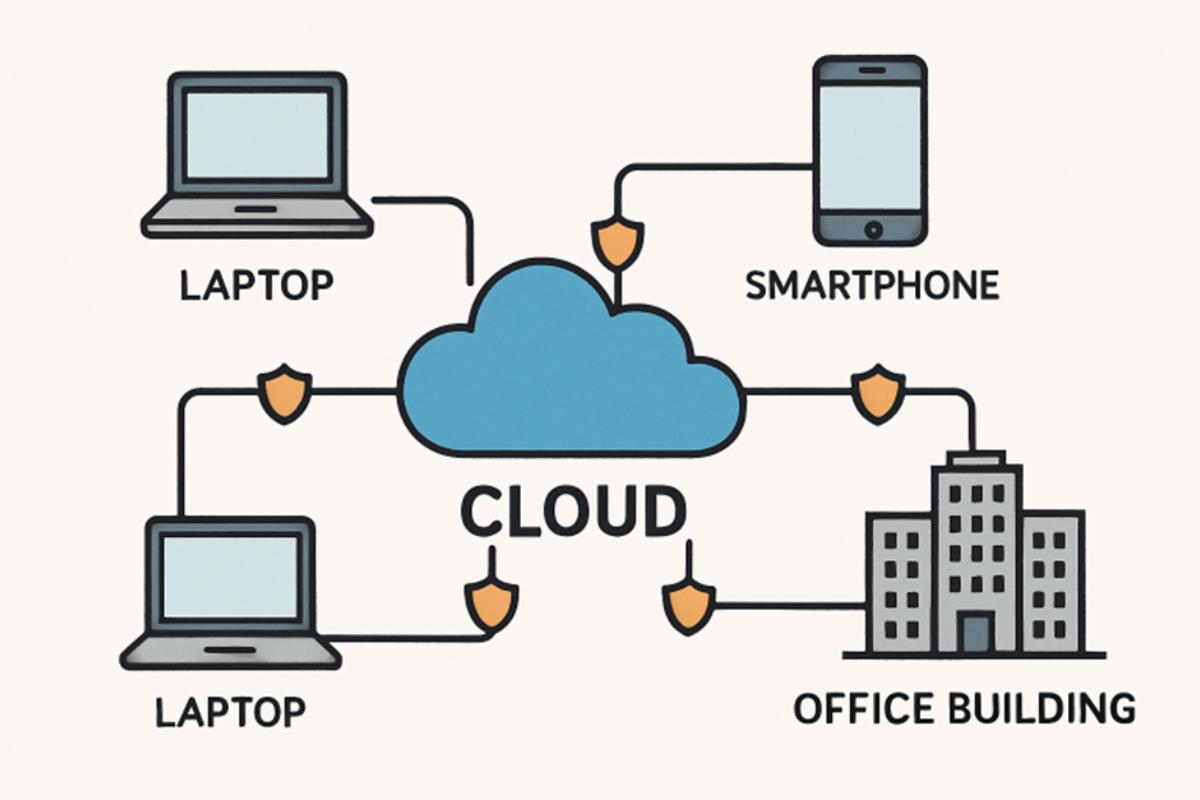
SASE, pronounced “sassy,” is a concept introduced by Gartner that converges wide-area networking (WAN) and multiple security functions, including secure web gateways, firewalls, and zero trust network access (ZTNA), into a unified, cloud-delivered service. The purpose is to deliver secure, fast, and reliable access to data and applications, whether employees are working in an office, at home, or on the go. Traditional network architectures were not built for the cloud or hybrid workforce scenarios, but SASE bridges that gap, ensuring comprehensive protection that adapts to users’ digital habits.
Key Components of SASE
A SASE solution consists of several critical components that together create a resilient and continuously protected digital environment:
- Software-Defined Wide Area Network (SD-WAN): SD-WAN dynamically routes application traffic for optimal performance and improved reliability. This intelligent routing enables seamless user experiences.
- Secure Web Gateway (SWG): SWG provides protection by monitoring and blocking malicious web content and restricting access to inappropriate destinations.
- Cloud Access Security Broker (CASB): CASB acts as a policy enforcement point for data and threat protection, controlling how cloud services are used within the organization.
- Zero Trust Network Access (ZTNA): ZTNA removes implicit trust, granting application access only after verifying the user and device identity. This minimizes the attack surface and prevents lateral movement by threat actors.
- Firewall as a Service (FWaaS): FWaaS delivers advanced firewall protection without requiring on-premises hardware, making deployment faster and ensuring consistent policy enforcement.
Benefits of Adopting SASE
Adopting SASE equips businesses to overcome a range of security and operational challenges. The advantages extend across the organization:
- Enhanced Security: Unified security services offer consistent data protection regardless of device or location. This alignment reduces rogue access points and strengthens defense against ransomware and phishing attacks.
- Improved Performance: SD-WAN and cloud-native architecture minimize latency, optimize bandwidth, and ensure productivity is not hindered by security bottlenecks.
- Scalability: Businesses can scale services up or down in response to demand, without needing to invest in additional physical devices or infrastructure upgrades.
- Cost Efficiency: Streamlining network and security under a single platform reduces both vendor complexity and operational overhead.
Implementing SASE in Your Organization
Transitioning to a SASE model should be planned and managed to minimize business disruption. Key steps include:
- Assess Current Infrastructure: Audit your current systems for weaknesses, redundant technologies, and compliance needs.
- Define Security Policies: Develop clear access policies, classify data, and implement strong user authentication mechanisms.
- Select a SASE Provider: Review vendors based on features, reputation, scalability, and compatibility with your existing IT landscape.
- Plan for Integration: Map out the deployment strategy, onboarding schedule, and training for IT teams.
- Monitor and Optimize: Use analytics and reporting tools to measure performance, detect anomalies, and continuously enhance configurations.
Challenges and Considerations
SASE adoption is compelling, but organizations must consider potential roadblocks:
- Complexity of Migration: Migrating from a traditional setup to SASE requires detailed planning and often involves restructuring network topologies and workflows.
- Vendor Lock-in: Entrusting a single provider with the entire security and network ecosystem can limit customization options and negotiating leverage in the future.
- Compliance Issues: SASE vendors differ in their support for regulatory standards and industry-specific certifications, so it is vital to ensure your solution meets all compliance requirements.
Future Trends in SASE
SASE continues to evolve as enterprise needs change. Artificial intelligence and machine learning are powering next-generation threat detection and automating incident response, while SASE providers expand support for hybrid workforces. Recent industry innovations include secure browsers that complement SASE frameworks, delivering granular web isolation for remote access and BYOD environments. These advancements underscore the ongoing shift from rigid, perimeter-based security to agile, user-centric solutions.
Conclusion
The rise of SASE marks a turning point for digital security and network management. As organizations accelerate their digital transformation initiatives, adopting a SASE framework ensures a balance of agility, protection, and efficiency across their digital pathways. Understanding the framework’s components, its benefits, and the practical steps to implementation sets businesses up for sustainable growth and resilient operations in a connected world.